Swamy Shraddananda, jailed for 30 years for killing his wife, has moved the Supreme Court seeking authorities to decide his mercy plea before the President in December, 2023.
A bench comprising Chief Justice B R Gavai and Justices Augustine George Masih and AS Chandurkar also directed that the offending video be immediately taken down and restrained the YouTube channel from republishing it or similar content.
The Supreme Court of India has reserved its interim orders on three key issues related to the Waqf (Amendment) Act, 2025, including the power to denotify waqf properties, the composition of waqf boards, and the provision regarding government land. The court heard arguments from both the petitioners, who challenged the validity of the amended law, and the Centre, which defended the Act as a secular concept. The petitioners sought interim orders to prevent the implementation of certain provisions while the court considers the legal challenges.
The bench questioned the petitioner for not moving the high court and directly coming to the apex court.
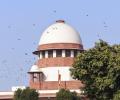
The Supreme Court of India has reprimanded the Rajasthan government over the alarming rise in student suicides in Kota. The court expressed its deep concern over the situation, questioning the state's efforts to address the crisis. The court also ordered an FIR to be filed in the case of a 22-year-old IIT Kharagpur student who died by suicide in his hostel room, citing a delay in reporting the incident to the police.
The Supreme Court of India has sought responses from the Centre and others on a petition challenging the constitutional validity of certain provisions of the Waqf Act, 1995. The petition argues that the Act gives undue favor to waqf properties and deprives non-Muslims of their property rights. The court has tagged the petition with pending petitions that raise similar issues.

The Supreme Court of India has ruled that maternity leave is a fundamental right and cannot be denied to a woman based on the number of children she has from previous relationships. The court overturned a Madras High Court decision that had denied maternity leave to a Tamil Nadu government school teacher who had two children from a previous marriage. The Supreme Court emphasized the importance of reproductive rights, including maternity benefits, as part of international human rights law. The court also highlighted the right to life under Article 21 of the Indian Constitution, which includes the right to health, dignity, and reproductive choice. The decision has significant implications for women's rights and reproductive healthcare in India.
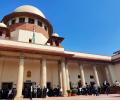
A seven-judge Constitution bench comprising Chief Justice DY Chandrachud and Justices BR Gavai, Vikram Nath, Bela Trivedi, Pankaj Mithal, Manoj Misra and Satish Chandra Sharma said there is no error apparent on the face of the record.

'Day by day we expose how soulless we have become as a society. Every day is a disappointment.'
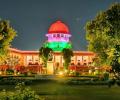
The petitioner's counsel said his client was facing threats of arrest and torture in his country as he was a former Liberation Tigers of Tamil Eelam member, and that his wife and children had settled in India.

"The entire nation was in shame due to the comments... We saw your videos , you were on the verge of using very filthy language but somehow better sense prevailed or you did not find suitable words. You should be shameful. Entire country is proud of our Army and you made this statement," Justice Surya Kant said.
The Supreme Court of India has ruled that governors cannot indefinitely delay giving assent to bills passed by state legislatures, setting a timeline of one to three months for their actions. The court said the governor must act "as soon as possible" and that failure to comply with the timeline will make their inaction subject to judicial review. The ruling comes as several opposition-ruled states have accused governors of delaying assent to bills passed by their assemblies.

The SC issued a notice informing listing of petition filed by Indian Young Lawyers Association seeking review of its 2018 judgment. The bench will also look at other contentious issues of alleged discrimination against Muslim and Parsi women.
A bench of Justices Vikram Nath and Sandeep Mehta also restored the destruction of evidence charge levelled on deputy commissioner of police Parampal Singh for directing the removal of the number plate of the car after the firing incident in 2015 in which a driver was killed.
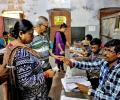
A plea has been filed in the Supreme Court seeking Special Intensive Revision (SIR) of electoral rolls, particularly before parliamentary, state assembly and local body elections. The court has agreed to hear a batch of petitions challenging the Election Commission's decision to undertake special intensive revision of electoral rolls in Bihar.
The plea claimed the blocking was effected by the intermediary pursuant to an undisclosed direction allegedly issued by the Centre citing vague grounds of "national security" and "public order".

The Supreme Court on Monday asked National Conference leader Mohammed Akbar Lone to file an affidavit swearing allegiance to the Constitution of India and accepting the country's sovereignty, after the 'Pakistan zindabad' slogan that he allegedly raised in the Jammu and Kashmir assembly in 2018 kicked up a massive row.
Preventive detention is an extraordinary power in the hands of the state that must be used sparingly, said the Supreme Court as it set aside an order to detain a man indulging in money lending in Kerala.

The Aligarh Muslim University's minority status issue will have to wait to reach a logical end after the Supreme Court majority verdict on Friday asked a regular bench to decide the issue.
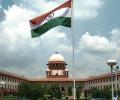
Is there no mechanism to abrogate Article 370 even when the people of Jammu and Kashmir want it, the Supreme Court asked on Thursday and wondered if the now repealed provision can't be touched, will it not amount to creating a "new category" beyond the basic structure of the Constitution.
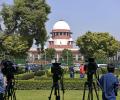
The Supreme Court on Monday dismissed a plea seeking a single 'constitutional religion' in the country, asking the petitioner can he prevent people from following their respective religious faiths.

The CBI will seek police remand of eight Jammu and Kashmir Police personnel arrested for allegedly inflicting brutal custodial torture on a fellow constable in 2023. The case involves allegations of severe abuse and mutilation, leading to a Supreme Court-ordered investigation.

The Bombay high court on Monday ordered a first information report (FIR) against five policemen for the custodial death of Badlapur sexual assault case accused Akshay Shinde, allegedly shot dead in a police van in September 2024, and setting up of an Special Investigation Team, noting that a prima facie offence is disclosed.
The Supreme Court of India has criticized the Enforcement Directorate (ED) for focusing solely on its own fundamental rights while pursuing a money laundering case related to the Nagrik Apurti Nigam (NAN) scam in Chhattisgarh. The court questioned the agency's attempt to transfer the case to New Delhi, noting that the agency's petition under Article 32 of the Constitution is typically reserved for individuals seeking redressal for fundamental rights violations.

The CJI called Justice Gavai his "biggest support" while expressing confidence in the latter's leadership and commitment to constitutional values.

The Supreme Court has agreed to hear the anticipatory bail plea of a cartoonist accused of uploading objectionable cartoons of Prime Minister Narendra Modi and RSS workers on social media. The Madhya Pradesh High Court had previously refused to grant him relief, observing it was a gross misuse of freedom of speech.

Justice Sanjiv Khanna, who has been part of several landmark Supreme Court judgements such as scrapping the electoral bonds scheme and upholding abrogation of Article 370, will be sworn in as the 51st Chief Justice of India on Monday.
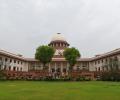
A Governor does not possess any discretion in exercise of functions under Article 200 of the Constitution in respect to any bill presented to them and must mandatorily abide by the advice tendered by the council of ministers, the Supreme Court has held.

The contentious paragraph from last year's verdict, instructing the state to expedite consideration of Meitei community inclusion, was deemed for deletion.
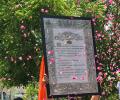
The Supreme Court on Friday observed the 1976 amendment to the Constitution adding terms 'socialist', 'secular' and 'integrity' to the Preamble underwent judicial reviews and it cannot say whatever Parliament did during the emergency period was all nullity.

The final NRC, a list of Indian citizens residing in Assam, was released in 2019 by excluding 19,06,657 people. However, it has not been notified by the Registrar General of India, leaving the controversial document without any official validity.
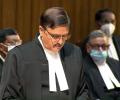
Justice Abhay S Oka, known for his unwavering commitment to liberty and constitutional values, bid farewell to the Supreme Court of India. In his final address, he stressed his dedication to upholding constitutional liberties, emphasizing that it was his "honest endeavor" to fulfill the dream of the Constitution's framers. He also expressed gratitude to the bar and his colleagues for their support and shared heartfelt memories from his time on the bench. Justice Oka's departure marks the end of a distinguished judicial career spanning over two decades, during which he served as a judge of the Bombay High Court, Chief Justice of the Karnataka High Court, and ultimately, as a Supreme Court justice.

The court said there is nothing on record to suggest that since 2023, Purkayastha was ever called to join the investigations.

The Delhi High Court has set aside a Central Information Commission (CIC) order that directed the disclosure of information related to Prime Minister Narendra Modi's bachelor's degree.
The Supreme Court of India has sought responses from the Centre and others on a petition challenging the blocking of the YouTube channel '4PM'. The petitioner, Sanjay Sharma, the Editor of the channel, alleges that the blocking order, issued by an intermediary based on an undisclosed direction from the Centre, violates his right to free speech and the public's right to information. The plea argues that the blocking was based on vague grounds of 'national security' and 'public order' without any opportunity to be heard. The court has issued notices to the Centre and others seeking their responses on the petition.

The Supreme Court of India will examine the jurisdiction of the Lokpal, India's anti-corruption ombudsman, in entertaining complaints against sitting high court judges. The court is considering a suo motu proceeding initiated over the Lokpal's January 27 order on the issue. The case involves two complaints filed against a sitting additional judge of a high court, alleging that he influenced a judge of the subordinate judiciary and a judge of the same high court set to deal with a suit filed against the complainant by a private company.

The five-judge constitution bench headed by Chief Justice DY Chandrachud, which heard their contentions at length, told them they will have to justify the procedure adopted for abrogation as the court cannot postulate a situation "where the ends justify the means".
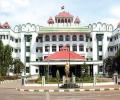
The Madras high court on Tuesday appointed an inquiry officer into the Sivaganga custodial death case and allowed a CB-CID probe into the matter.

The Supreme Court on Tuesday came down heavily on the Karnataka government over actor Kamal Haasan's film "Thug Life" not being released in the state, saying mob and vigilantes cannot be allowed to take to the streets.
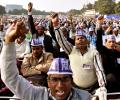
The Union Cabinet, at a meeting chaired by Prime Minister Narendra Modi, held a detailed discussion on the Supreme Court judgement on the sub-categorisation of reservation for SCs and STs as granted in the Constitution.
 © 2026 Rediff.com - Advertise with us - Disclaimer - Privacy Policy - Sitemap - Feedback - About us - Terms of use - Grievances